
 By seobymkhan@gmail.com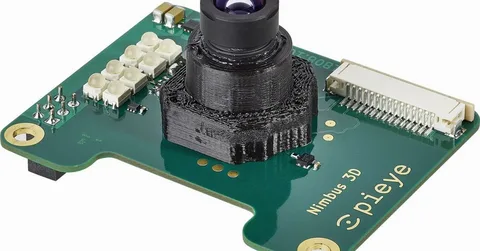
Smart devices, autonomous robots, and AI-powered machines all rely on one essential thing—vision. But in complex environments, ordinary 2D vision just isn’t enough. Enter the Time of Flight (ToF) camera, a breakthrough in real-time depth sensing that allows systems to perceive and interact with their surroundings in three dimensions. Whether it’s measuring distances, detecting gestures, or navigating autonomously, a time of flight ToF camera enables devices to “see” like never before.
This article will help you understand what a ToF camera is, how it works, why it’s so important, and where it’s being used today. We’ll also explore the key features of cutting-edge ToF systems, including industry-leading models, and compare them to other 3D imaging technologies. If you’re a developer, engineer, or product designer, this is your complete guide to mastering ToF depth vision.
ToF cameras are especially valuable in robotics, automation, and AI, where fast and reliable 3D vision is critical. A powerful solution on the market today is the MRDVS M-Series Time-of-Flight Camera, which is optimized for performance, edge AI integration, and easy deployment in smart systems.
What Is a Time of Flight ToF Camera?
A time of flight ToF camera is a 3D sensor that captures depth information by measuring how long it takes a pulse of light to travel to an object and reflect back. This measurement—called the “time of flight”—is used to calculate the distance between the camera and every point in the scene.
How it works:
- The ToF sensor emits a modulated light signal, usually infrared (IR).
- The light reflects off objects and returns to the sensor.
- The sensor calculates the time delay for each pixel.
- A depth map is created in real time, giving a full 3D view of the scene.
Because it generates depth data for each pixel, the ToF camera offers an accurate, high-speed way to capture 3D information. It’s this efficiency that makes it ideal for smart vision systems.
Benefits of Using a Time of Flight ToF Camera
ToF cameras provide a wide range of benefits over traditional 2D cameras or even stereo vision setups. Here’s why they’re a game-changer:
Real-Time Performance: ToF cameras operate at high frame rates, capturing dynamic scenes instantly. This makes them ideal for applications that require quick reaction times, such as robotics, gesture control, and autonomous navigation.
Millimeter Accuracy: With precision depth sensing, these cameras enable highly accurate spatial data collection, which is essential for quality inspections, mapping, and real-time decision-making in industrial and commercial environments.
Compact and Durable: ToF modules are designed without moving parts, making them lightweight, compact, and robust enough to handle challenging conditions. They can be easily integrated into mobile devices, drones, and embedded systems.
Low Light Functionality: Unlike traditional vision systems, ToF cameras function exceptionally well in complete darkness thanks to their use of active infrared illumination. This allows them to maintain performance even in dynamic or poorly lit environments.
Versatility: Time of Flight cameras are suitable for a wide range of applications, including mobile, industrial automation, medical devices, and consumer electronics. Their ability to perform reliably across different use cases makes them a go-to solution for modern depth sensing.
These features highlight why ToF cameras are rapidly becoming the preferred depth-sensing solution in emerging markets. For a deeper look at how advanced imaging is being applied in real-world tech, explore the AOSU Camera technology guide.
Leading Use Cases for ToF Cameras
Robotics and Autonomous Navigation
ToF cameras enable real-time path planning, object avoidance, and environment mapping for mobile robots and drones.
Industrial Automation
In manufacturing:
- Machines can detect objects with varying sizes.
- Conveyor belts can monitor packages for defects or misalignment.
- Robots can safely interact with workers and equipment.
Mobile Devices and Smart Tech
ToF sensors are already in:
- Smartphones for face unlock and AR filters
- Smart TVs for gesture-based control
- Wearable tech and gaming consoles
AR/VR Systems
ToF sensors bring realism to mixed-reality environments by enabling:
- Accurate room-scale tracking
- Depth-based scene mapping
- Natural hand interaction
Medical and Healthcare
ToF cameras are used for:
- Non-contact patient monitoring
- Posture and motion analysis in physical therapy
- Gesture control in sterile environments like operating rooms
ToF vs Other Depth Technologies
| Feature | Time of Flight (ToF) | Stereo Vision | LiDAR |
| Depth Accuracy | High (1-5mm) | Moderate | Very High |
| Speed | Very Fast (up to 60 fps) | Slower | Moderate |
| Size and Weight | Compact | Medium | Bulky |
| Performance in Low Light | Excellent | Poor | Good |
| Price | Moderate | Low | High |
| Ideal Application | Mobile, Robotics, AR | Indoor vision systems | Outdoor 3D mapping |
This comparison shows why ToF has become the preferred solution in scenarios requiring real-time 3D vision in compact, embedded, or dynamic environments.
Why Choose the MRDVS M-Series Time-of-Flight Camera?
The MRDVS M-Series ToF camera stands out due to its powerful feature set, developer tools, and real-world reliability.
Key features:
- High-Resolution Depth Maps: Provides detailed, millimeter-accurate 3D data.
- Wide Field of View: Covers large areas for better scene understanding.
- Durable Design: Built for industrial environments with vibration and dust.
- Edge AI Support: Compatible with real-time AI processing for decision-making at the device level.
- Developer-Friendly SDKs: Easy integration with Python, ROS, OpenCV, and more.
Whether you’re working on mobile robots, factory automation, or AR/VR systems, MRDVS helps you deploy ToF vision quickly and effectively.
Also read this: RGB-D Cameras
Best Practices for Integrating a ToF Camera
When integrating a ToF camera into your system, consider the following:
- Define Your Range: Ensure the selected camera supports your desired measurement distance.
- Account for Reflectivity: Shiny or dark surfaces may require tuning or filtering.
- Choose the Right Frame Rate: For dynamic environments, 30–60 fps is ideal.
- Use Depth Filtering: Clean noisy data using built-in software tools or custom algorithms.
- Optimize Processing: Offload tasks to edge AI modules to reduce latency.
Following these steps will help ensure reliable and efficient performance in any application.
NLP and LSI Keywords for SEO Optimization
To maximize visibility and semantic relevance, use these NLP-friendly variations of your focus keyword:
- real-time 3D sensor
- infrared depth camera
- time-of-flight sensor module
- embedded vision system
- smart camera with depth perception
- machine vision for robotics
- high-speed ToF camera sensor
Incorporating these naturally into content improves indexing and drives targeted traffic from search engines.
Case Study: Autonomous Retail Robot with ToF Camera Integration
A retail technology company integrated ToF cameras into its autonomous customer service robots to enhance obstacle detection and improve customer interaction.
Results achieved:
- 40% improvement in path planning and navigation
- 30% faster interaction response
- Reduced customer assistance time by 20%
The ToF camera enabled robots to detect approaching customers, avoid displays, and interact in real time—proving its utility in high-traffic, real-world environments.
Future Trends in ToF Camera Technology
As technology evolves, so do ToF sensors. Here’s what the future holds:
1. Ultra-Miniaturized ToF Chips
Next-gen ToF sensors will be smaller, thinner, and optimized for wearables and mobile devices.
2. AI-Enhanced Depth Analysis
Integrated edge AI will enable object detection, segmentation, and gesture control—all processed locally.
3. Fusion with RGB and Thermal Imaging
ToF data will be combined with color and temperature data for richer context and better decision-making.
4. Lower Power Consumption
Battery-friendly modules will power mobile robots, IoT systems, and handheld devices.
These trends point to a future where ToF cameras are standard in all smart environments—from home assistants to industrial bots.
Conclusion: Why Time of Flight ToF Cameras Are Leading the Vision Revolution
The time of flight ToF camera is more than just a sensor—it’s the engine of a new generation of spatially aware machines. Whether you’re building autonomous robots, immersive AR/VR apps, or intelligent medical devices, ToF technology delivers the precision and speed you need.
As industries grow smarter and automation expands, ToF cameras will be at the heart of this transformation. With proven tools like the MRDVS M-Series, companies can integrate cutting-edge depth vision into their systems with confidence, speed, and long-term reliability.